Showing posts with label Let's Nailed The World. Show all posts

Wednesday, 31 August 2016

Libya: The Region West of The Nile Valley

Libya, is a country in the Maghreb region of North Africa, bordered by the Mediterranean Sea to the north, Egypt to the east, Sudan to the southeast, Chad and Niger to the south, and Algeria and Tunisia to the west. The three traditional parts of the country are Tripolitania, Fezzan and Cyrenaica. With an area of almost 1.8 million square kilometres (700,000 sq mi), Libya is the fourth largest country in Africa, and is the 16th largest country in the world. Libya has the 10th-largest proven oil reserves of any country in the world.


The largest city and capital, Tripoli, is located in western Libya and contains over one million of Libya's six million people. The other large city is Benghazi, which is located in eastern Libya. The currency is Libyan dinar (LYD).
Some interesting facts are:
1. Loans to Libyan citizens are given with NO interest.

2. Students would get paid the average salary for the profession they are studying for.


3. If you are unable to get employment the state would pay the full salary as if you were employed until you find employment.

4. When you get married the couple gets an apartment or house for free from the Government.


5. You could go to college anywhere in the world. The state pays 2,500 euros plus accommodation and car allowance.


6. The cars are sold at factory cost.


7. Libya does not owe money, (not a cent) to anyone. No creditors.

8. Free education and health care for all citizens.

9. Leptis Magna– Excavated in the 1920’s this World Heritage site is a magnificently preserved Roman city dating back to the 10 Century BC. You can clearly make out public monuments, a harbor, market-place, storehouses, shops and residential districts.


10. Another UNESCO site in the Caucasus Mountains features rock art dating back to 12,000 BC. The paintings and carvings at this site depict giraffes, ostriches, elephants, camels, as well as humans and horses.


For more facts visit:
http://www.factsking.com/countries/libya/
http://edition.cnn.com/2013/09/20/world/libya-fast-facts/

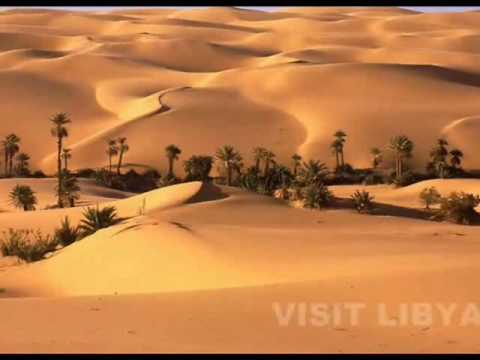
Some beautiful places are:


For tourism details visit:
https://www.lonelyplanet.com/libya

I am also on:
Instagram/Skype/Snapchat//Twitter: shahebaz001

Find Me:
Facebook: https://www.facebook.com/shahebazk
Blog: http://khanshahebaz.blogspot.com/


Sunday, 28 February 2016

Tunisia: The Smallest Country in North Africa

Tunisia, officially the Tunisian Republic or the Republic of Tunisia is the northernmost country in Africa, covering 165,000 square kilometres (64,000 sq mi). Its northernmost point, Ras ben Sakka, is the northernmost point on the African continent. It is bordered by Algeria to the west, Libya to the southeast, and the Mediterranean Sea to the north and east. Tunisia's population was estimated to be just under 10.8 million in 2013. Tunisia's name is derived from its capital city, Tunis, which is located on Tunisia's northeast coast.


Geographically, Tunisia contains the eastern end of the Atlas Mountains and the northern reaches of the Sahara desert. Much of the rest of the country's land is fertile soil. Its 1,300 kilometres (810 mi) of coastline includes the African conjunction of the western and eastern parts of the Mediterranean Basin and, by means of the Sicilian Strait and Sardinian Channel, features the African mainland's second and third nearest points to Europe after Gibraltar. The currency is Tunisian dinar (TND).


Some interesting facts are:
1. Tunisia is the northernmost African country, apart from being the smallest nation situated along the Atlas mountain range.


2. Kairouan city is the fourth most important city in the Muslim world after Mecca, Medina and Jerusalem.


3. The Tunisian oasis at Kebili has been found to be containing evidence of Stone Age settlements.


4. Till date, Tunisia has had only two presidents - Habib Bourgiba, who ruled from 1956 until 1987, and Zine El Abidine Ben Ali, who assumed power in a bloodless coup in 1987.


5. Most nationalities do not require Visas to enter the country.


6. The highest point in Tunisia is formed by Jebel ech Chambi (1,544 m).


7. 98% of the population are Muslims.

For more facts visit:
https://www.lonelyplanet.com/tunisia
http://www.factmonster.com/country/tunisia.html

Some beautiful places are:


For tourism details visit:
http://www.tourismtunisia.com/

Sunday, 7 February 2016

Algeria: The Country in a Desert

Algeria, officially People's Democratic Republic of Algeria, is a country in North Africa on the Mediterranean coast. Its capital and most populous city is Algiers, located in the country's far north. With an area of 2,381,741 square kilometres (919,595 sq mi), Algeria is the tenth-largest country in the world, and the largest in Africa and the Arab world. Algeria is bordered to the northeast by Tunisia, to the east by Libya, to the west by Morocco, to the southwest by Western Sahara, Mauritania, and Mali, to the southeast by Niger, and to the north by the Mediterranean Sea. The country is a semi-presidential republic consisting of 48 provinces and 1,541 communes. Abdelaziz Bouteflika has been President since 1999.


Ancient Algeria has known many empires and dynasties, including ancient Numidians, Phoenicians, Carthaginians, Romans, Vandals, Byzantines, Umayyads, Abbasids, Idrisid, Aghlabid, Rustamid, Fatimids, Zirid, Hammadids, Almoravids, Almohads, Ottomans and the French colonial empire. Berbers are generally considered to be the indigenous inhabitants of Algeria. Following the Arab conquest of North Africa, most indigenous inhabitants were Arabised; thus, although most Algerians are Berber in origin, most identify with Arab culture. En masse, Algerians are a mix of Berbers, Arabs, Turks and Black Africans.

The North African country supplies large amounts of natural gas to Europe, and energy exports are the backbone of the economy. According to OPEC Algeria has the 17th largest oil reserves in the world and the second largest in Africa, while it has the 9th largest reserves of natural gas. Sonatrach, the national oil company, is the largest company in Africa. Algeria has one of the largest militaries in Africa and the largest defence budget on the continent; most of Algeria's weapons are imported from Russia, with whom they are a close ally. Algeria is a member of the African Union, the Arab League, OPEC, the United Nations and is the founding member of the Maghreb Union. The currency is Dinar (DZD).


Some interesting facts are:
1. Over 90% of Algeria is covered by the Sahara desert.


2. Unlike in other Islamic nations, women in Algeria have gained more prominent status in the society. Women make up 60% of Algeria’s judges, 70% of the lawyers, and 60% of the student population. What’s more, they have a bigger household income contribution than men.


3. Algeria is the largest oat market in Africa.


4. In 2007, a court in Algeria had to rule on the ownership of a donkey which had eaten the money brought by a purchaser for its sale.

5. The National holiday, called Revolution Day, is on November 1.


6. Algerian singer Cheb Mami sang with Sting on 1999 hit Desert Rose.

For more facts visit:
http://www.lonelyplanet.com/algeria
http://www.factmonster.com/country/algeria.html

Some beautiful places are:


For tourism details visit:
http://www.algeria.com/

Saturday, 30 January 2016

Morocco: The Largest Producer of Hashish

Africa

Africa is the world's second-largest and second-most-populous continent. At about 30.2 million km2 (11.7 million sq mi) including adjacent islands, it covers six percent of Earth's total surface area and 20.4 percent of its total land area. With 1.1 billion people as of 2013, it accounts for about 15% of the world's human population. The continent is surrounded by the Mediterranean Sea to the north, both the Suez Canal and the Red Sea along the Sinai Peninsula to the northeast, the Indian Ocean to the southeast, and the Atlantic Ocean to the west. The continent includes Madagascar and various archipelagos. It has 54 fully recognized sovereign states (or countries), nine territories and two de facto independent states with limited or no recognition.


Africa's population is the youngest amongst all the continents; the median age in 2012 was 19.7, when the worldwide median age was 30.4. Algeria is Africa's largest country by area, and Nigeria by population. Africa, particularly central Eastern Africa, is widely accepted as the place of origin of humans and the Hominidae clade (great apes), as evidenced by the discovery of the earliest hominids and their ancestors, as well as later ones that have been dated to around seven million years ago, including Sahelanthropus tchadensis, Australopithecus africanus, A. afarensis, Homo erectus, H. habilis and H. ergaster – with the earliest Homo sapiens (modern human) found in Ethiopia being dated to circa 200,000 years ago. Africa straddles the equator and encompasses numerous climate areas; it is the only continent to stretch from the northern temperate to southern temperate zones.

Africa hosts a large diversity of ethnicities, cultures and languages. In the late 19th century European countries colonized most of Africa. Most modern states in Africa originate from a process of decolonization in the 20th century.

For more facts visit:
http://www.lonelyplanet.com/africa

Morocco

Morocco, officially the Kingdom of Morocco, is a country in the Maghreb region of North Africa. Geographically, Morocco is characterized by a rugged mountainous interior and large portions of desert. It is one of only three countries (with Spain and France) to have both Atlantic and Mediterranean coastlines. The Arabic name al-Mamlakah al-Maghribiyah are commonly used as alternate names.

Morocco has a population of over 33.8 million and an area of 446,550 km2 (172,410 sq mi). Its political capital is Rabat, although the largest city is Casablanca; other major cities include Marrakesh, Tangier, Tetouan, Salé, Fes, Agadir, Meknes, Oujda, Kenitra, and Nador. A historically prominent regional power, Morocco has a history of independence not shared by its neighbours. Its distinct culture is a blend of Arab, indigenous Berber, Sub-Saharan African, and European influences.


Morocco claims the non-self-governing territory of Western Sahara as its Southern Provinces. Morocco annexed the territory in 1975, leading to a guerrilla war with indigenous forces until a cease-fire in 1991. Peace processes have thus far failed to break the political deadlock.

Morocco is a constitutional monarchy with an elected parliament. The King of Morocco holds vast executive and legislative powers, especially over the military, foreign policy and religious affairs. Executive power is exercised by the government, while legislative power is vested in both the government and the two chambers of parliament, the Assembly of Representatives and the Assembly of Councillors. The king can issue decrees called dahirs which have the force of law. He can also dissolve the parliament after consulting the Prime Minister and the president of the Constitutional court.

Morocco's predominant religion is Islam, while the official languages are Arabic and Berber. Moroccan Arabic, referred to as Darija, and French are also widely spoken. Morocco is an influential member of the Arab League and a part of the Union for the Mediterranean. It has the sixth-largest economy in Africa. The capital is Rabat & the largest city is Casablanca. The currency is Moroccan dirham (MAD).


Some interesting facts are:
1.Morocco is one of the world’s largest producers of illicit hashish.


2. Morocco’s national animal is the Barbary lion. DNA evidence from two lion skulls found in the Tower of London prove that English royalty owned at least two Barbary lions sometime between the 13th and 15th centuries.


3. Often called the “Red City,” Marrakech, Morocco, requires sun protection and headgear of some kind all year-round, even during winter.


4. Morocco is the largest processor and exporter of sardines in the world.


5. The English word “genie” comes directly from the Arabic word djinn, denoting a spiritual being that may play some part in human affairs if called upon. In Morocco, djinns are believed to frequent places associated with water: public baths, drains, sinks, and even pots and pans.


6. The Hassan II Mosque in Casablanca is the world’s seventh largest mosque and took five years of intensive labor by over 30,000 workers and craftsman to complete in 1993. The mosque’s minaret at 689 feet (210 m) high is the world’s tallest, and it is Casablanca’s chief landmark. In terms of covered area, the Hassan II Mosque is the largest in the world and has space for 80,000 worshipers.


7. Traditionally the liver, not the heart, is considered to be the symbol of love in Morocco.


8. In Morocco, very few citizens have private baths, and a ritual purification of the body is essential before Muslims can perform prayers, so many Moroccans bath at the public hamman (bath). The hammam is segregated and, along with the local zaouia (saints’ shrine), is an important place for women to socialize.


9. The tomb of John the Baptist is said to reside in the shrine of Sidi Yahia ben Younes, situated in the Moroccan city of Oujda.


10. The Venus of Tan-Tan, a 2.36 inch (6 cm) stone carving found in a nearby river bed in 1999 in Morocco, is alleged to be between 300,000 and 500,000 years old and may be the earliest artistic representation of the human form.


For more facts visit:
http://www.lonelyplanet.com/morocco
http://facts.randomhistory.com/morocco-facts.html

Some beautiful places are:


For tourism details visit:
http://www.morocco.com/
http://muchmorocco.visitmorocco.com/